Log In / Register

 Canadian owned & operated. Products proudly made in Ontario, Canada >>
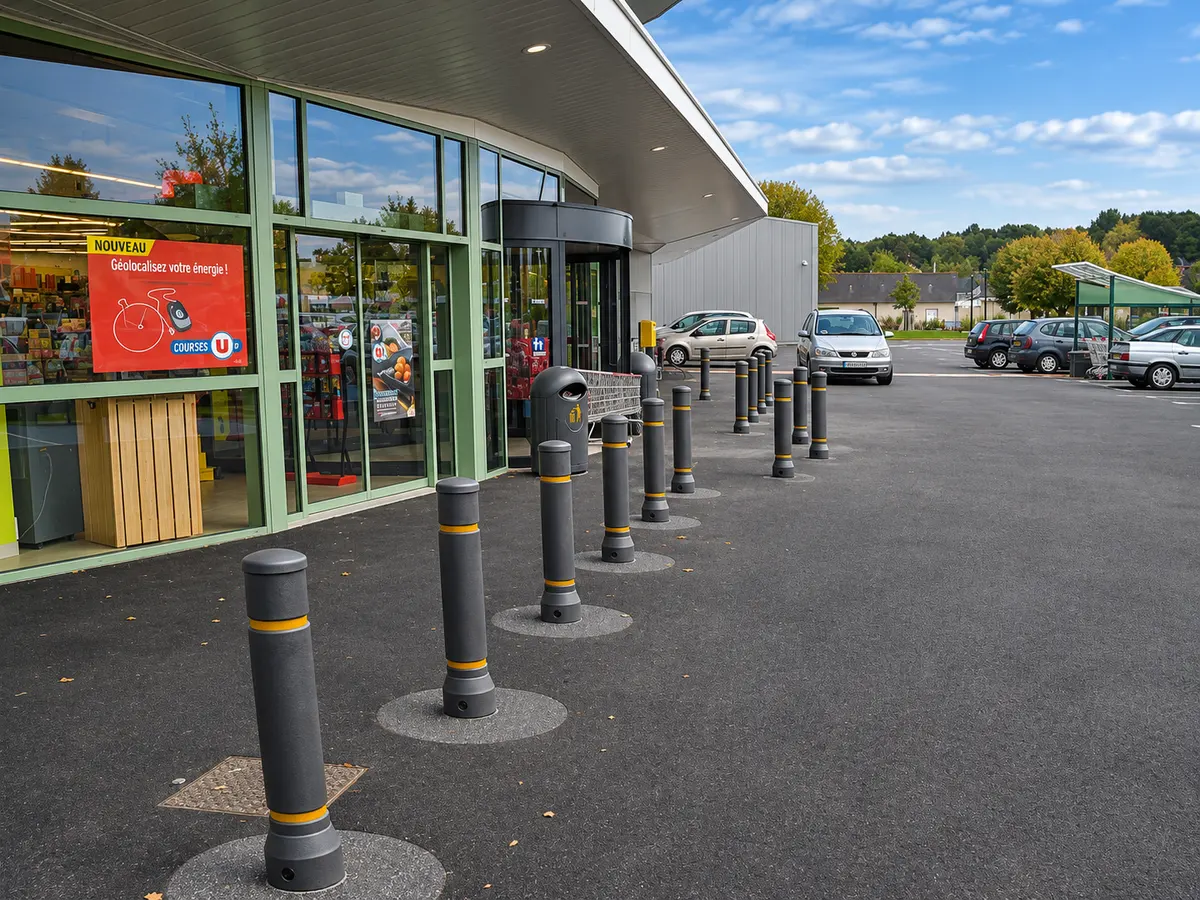
If you walk through a busy downtown, university campus, or shopping centre, you'll probably notice bollards along sidewalks, outside buildings, and around pedestrian areas. They're easy to overlook, but they actually play an important role in keeping these spaces safe, organized, and easy to navigate.
The main purpose of commercial bollards is fairly simple. They help separate pedestrians from vehicles, guide traffic, and define areas where vehicle access should be limited. But that's not all they do. The right bollards can also improve the overall appearance of a streetscape and make outdoor spaces feel more organized and welcoming.
For municipalities, Business Improvement Areas (BIAs), property managers, and other organizations, bollards are a practical addition to just about any outdoor improvement project. Let's take a closer look at where they're most useful, what benefits they offer, and how to choose the right ones for your property.
Commercial bollards are short, upright posts installed in outdoor areas to define boundaries, manage vehicle access, and guide pedestrian movement.
You'll find them in all sorts of places, from downtown shopping streets and university campuses to parking lots, parks, and public buildings.
Although they might look relatively simple, they serve several important purposes:
One thing to remember is that not all bollards are designed for the same purpose. Some are primarily decorative, while others are designed for traffic guidance, access control, or specific safety applications.
Choosing the right type really comes down to how the space is used and what you're trying to accomplish.
One of the reasons bollards for public spaces are so useful is their flexibility. They work in all kinds of environments, particularly where pedestrians, cyclists, and vehicles share the same space.
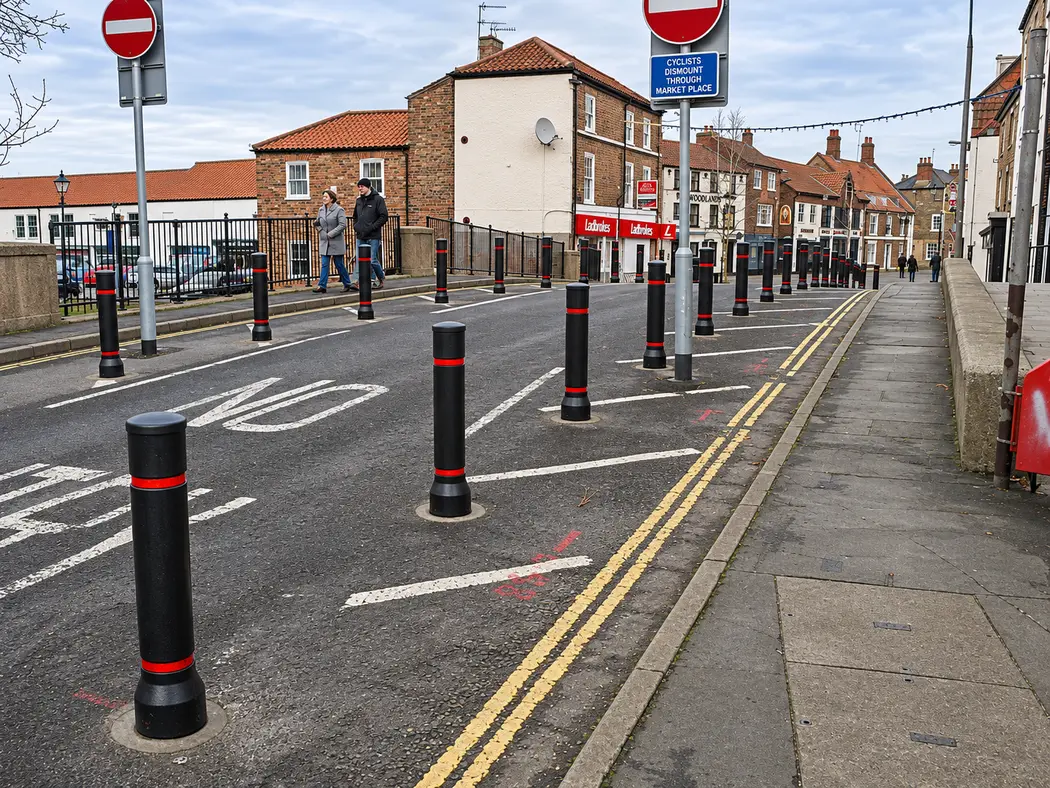
BIAs and municipalities put a lot of effort into making downtown areas safer, more attractive, and easier for people to get around.
The challenge is that these areas are often busy with shoppers, cyclists, delivery vehicles, restaurant patios, and community events. Keeping everything organized isn't always easy. This is where street bollards can make a real difference.
They can help:
Bollards can also contribute to a consistent streetscape, especially when their colours and finishes complement nearby benches, planters, and other outdoor furniture.
For instance, Classic Displays' Neopolitan 20 Bollard features a contemporary design available in several colours, making it an option worth considering for downtown improvement projects.
University and college campuses can get extremely busy, particularly between classes when hundreds of students are moving between buildings.
Add bicycles, service vehicles, parking areas, and deliveries into the mix, and it's easy to see why organized pathways are so important.
Campus bollards can help by:
They're especially useful near entrances where pedestrians and cyclists interact with vehicle traffic.
For campuses improving their cycling infrastructure, the Cyclesafe Bollard from Classic Displays is designed specifically for bike lane delineation.

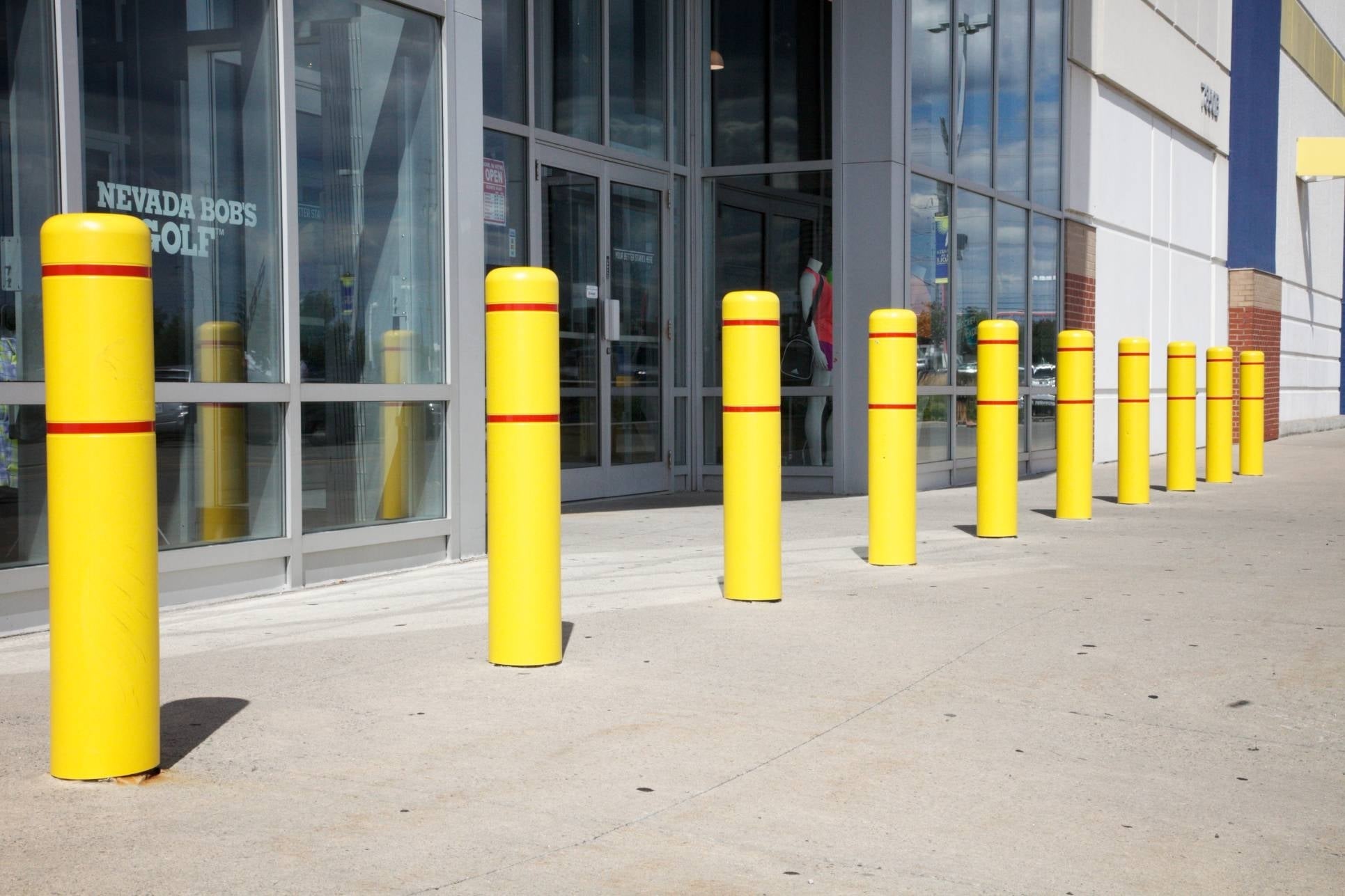
Think about how much activity takes place around a typical shopping centre. Customers are walking from parking lots to storefronts, delivery vehicles are accessing loading areas, and employees are moving between buildings. Without clear boundaries, these spaces can quickly become confusing.
Commercial safety bollards can help property managers:
Another consideration is maintenance and appearance. For properties with existing bollards, BollardGuard covers offer an easy way to update their appearance while improving visibility through reflective tape.
Parks and recreational areas need to remain accessible to the public while keeping certain spaces off-limits to unauthorized vehicles. For example, a park pathway may need to accommodate pedestrians, cyclists, and maintenance crews without allowing regular vehicle traffic.
Outdoor bollards are useful for:
The important thing is to choose a setup that supports accessibility while allowing maintenance and emergency vehicles to enter when necessary.
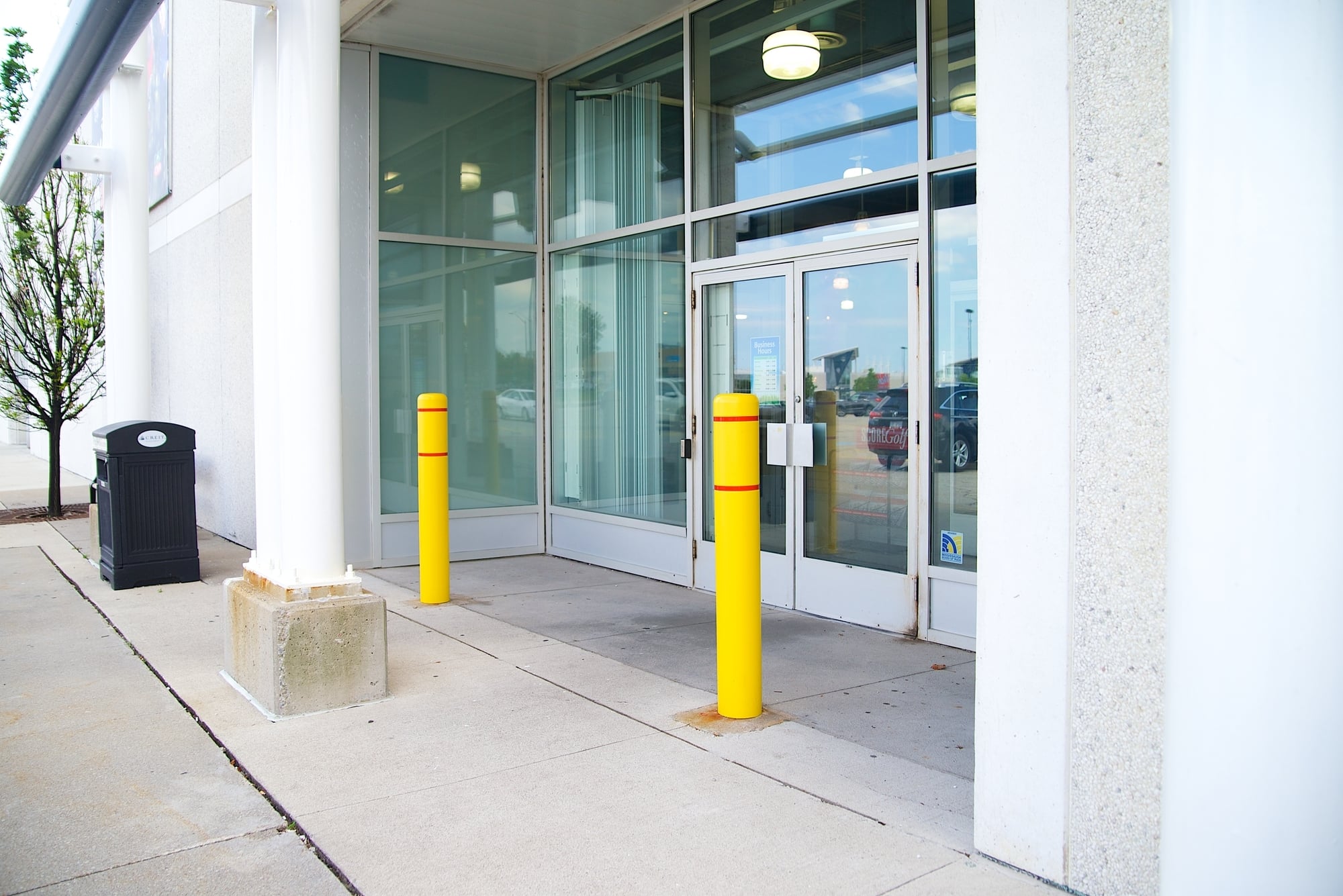
Public facilities often have a lot happening around their entrances. Pedestrians, private vehicles, public transit, delivery trucks, and emergency services may all need access to the same general area. Bollards help define where vehicles can travel and where pedestrian routes should remain clear.
For example, the Ensign Bollard features a large 12-inch sign face that makes traffic restrictions easier to recognize. Of course, placement is particularly important around facilities such as hospitals, where accessibility and emergency access must remain a priority.

One of the biggest advantages of pedestrian safety bollards is that they make boundaries more obvious.
In a busy parking lot, shared street, or public plaza, it isn't always clear where pedestrians should walk or where vehicles are allowed to go. A few well-placed bollards can help make those boundaries easier to recognize.
Some of the main benefits include:
Something worth pointing out is that not every bollard is designed to stop a moving vehicle.
Decorative bollards and general traffic-control products shouldn't be treated as crash-rated barriers. If a property requires vehicle-impact protection, the bollards must be specifically tested and rated for that purpose.
Accessibility also needs to be part of the planning process. Bollards should remain visible without blocking pedestrian routes or creating obstacles for people using wheelchairs and other mobility devices.
Choosing the right bollards isn't just about finding a style that looks good. You also need to think about how they'll be used, where they'll go, and what kind of conditions they'll face throughout the year.
Here are a few important considerations.
First, think about what you want the bollards to accomplish. Are you trying to define a pedestrian area, guide cyclists, restrict vehicle access, or provide verified collision protection? Different applications call for different products, so getting this right from the beginning can help avoid problems later.
Canadian weather can be tough on outdoor infrastructure. Between freezing temperatures, snow, road salt, heavy rain, and summer heat, outdoor bollards in Canada need to handle quite a lot.
Look for materials and finishes suited to the environment, particularly in locations exposed to snow-clearing equipment or frequent vehicle activity. Durability is especially important for municipalities and property managers responsible for maintaining multiple outdoor areas.
A bollard isn't particularly useful if people can't see it or if it creates an obstacle.
A few things to consider include:
Spacing is another consideration. The right distance between bollards depends on the location, intended purpose, and applicable accessibility requirements.
Bollards don't have to look purely functional. Contemporary designs can work well around modern commercial developments and university campuses, while more traditional styles may suit historic downtown areas.
Matching bollards with existing benches, planters, and other site furniture also helps create a more consistent appearance.
Finally, consider how the bollards will be installed and maintained. Fixed and removable options serve different purposes, and installation requirements can affect the overall project cost.
It's also worth thinking about snow removal, surface repairs, delivery access, and ongoing maintenance before making a final decision.
Classic Displays offers several commercial bollard options for public spaces, commercial properties, campuses, and other outdoor environments.
The best choice depends on how you plan to use them, but here are a few options worth considering:
Each product serves a slightly different purpose, so it's worth comparing the available designs and features before deciding.
You can explore the full Classic Displays commercial bollard collection to find options that suit your property.
Bollards work best when they're planned as part of the overall outdoor space, rather than added after everything else is already in place.
For municipalities, BIAs, and commercial property managers, this means thinking about pedestrian movement, vehicle access, landscaping, and other site furniture together.
Here are five steps to keep in mind:
For example, a downtown improvement project might combine bollards with commercial bike racks, planters, and seating to make pedestrian areas more organized and welcoming.
Classic Displays also offers a broader range of commercial site furniture for organizations planning larger outdoor improvements.
The right bollards can make a noticeable difference in how people use and move through an outdoor space.
From busy downtown streets and university campuses to shopping centres, parks, and public facilities, they help guide traffic, define pedestrian areas, and keep outdoor environments better organized.
For municipalities, BIAs, and property managers, choosing the right bollards is a practical investment in both safety and streetscape design.
If you're planning a new development or looking to improve an existing property, see Classic Displays' commercial bollards and contact the team to discuss the best options for your project.
Commercial bollards are used to define pedestrian spaces, manage vehicle access, guide traffic, and organize outdoor areas. You'll commonly find them around shopping centres, public buildings, campuses, parks, and downtown streets. Depending on their design, they may serve decorative, traffic-guidance, access-control, or certified impact-protection purposes.
Bollards are commonly installed near pedestrian entrances, parking areas, public plazas, cycling routes, and locations where vehicle access needs to be restricted. The best placement depends on traffic patterns, accessibility requirements, emergency access, and how the space is used.
Decorative bollards primarily define spaces and complement surrounding architecture. Traffic-guidance bollards help communicate boundaries and vehicle restrictions. Impact-rated safety bollards are specifically engineered and tested for vehicle-collision conditions. Decorative bollards shouldn't be treated as crash-rated barriers unless their performance has been verified.
Pedestrian bollard spacing depends on the location, intended purpose, accessibility standards, and vehicle access requirements. There isn't one measurement that works everywhere. The important thing is to maintain adequate clearance for pedestrians and mobility devices while meeting the site's traffic-management needs.
Canadian businesses should consider durability, weather resistance, visibility, accessibility, and maintenance requirements. Snow, ice, road salt, and changing temperatures can all affect outdoor infrastructure, so material selection is important. Bollards should also complement the surrounding property and meet applicable installation requirements.