Log In / Register

 Canadian owned & operated. Products proudly made in Ontario, Canada >>
Canadian owned & operated. Products proudly made in Ontario, Canada >>
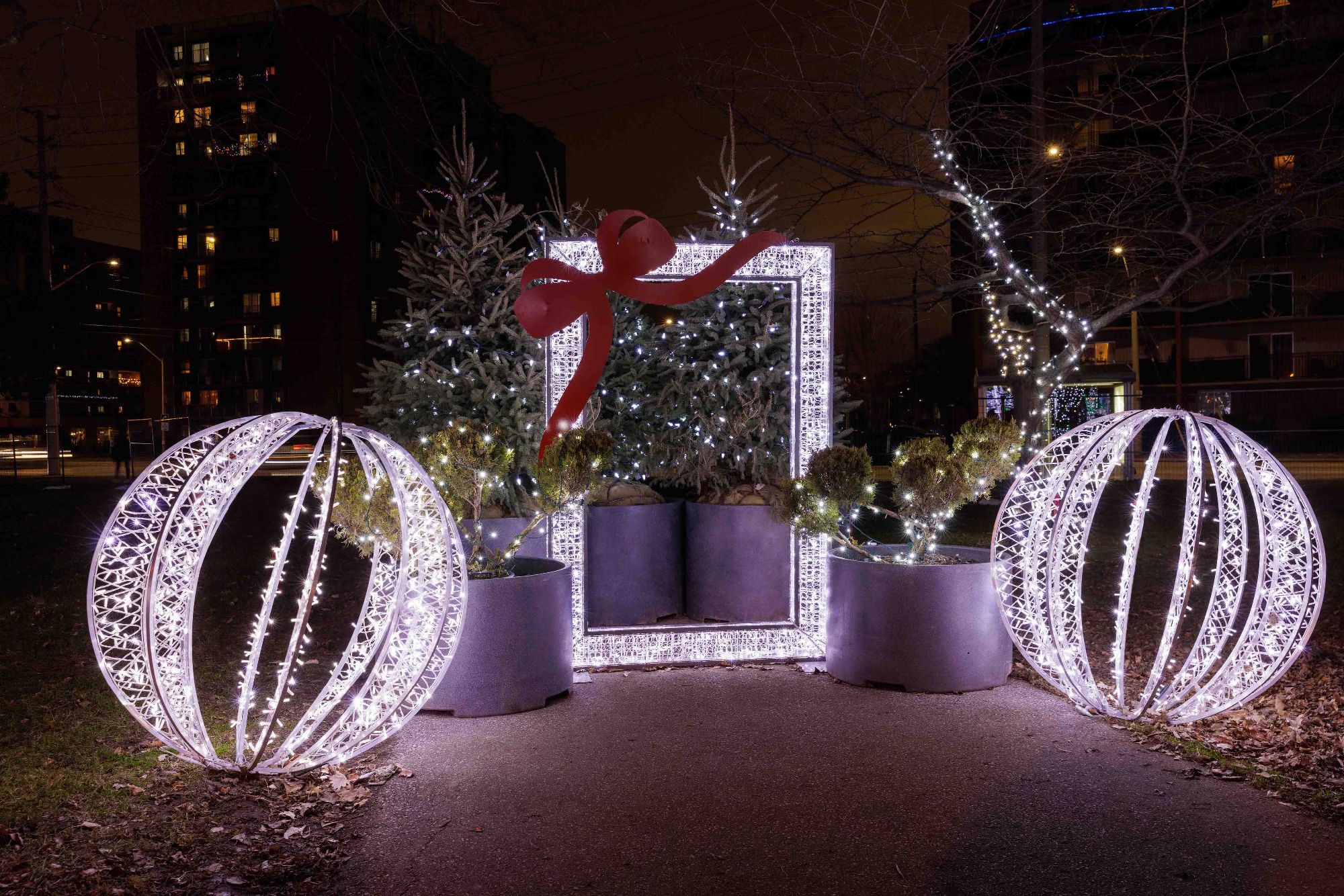
During the holidays, downtown areas are generally designed to be photogenic, warm, and inviting – all great ways to get foot traffic to linger around and increase dwell time, and of course, bring more customers through doors.
This is a playbook that guides business improvement areas and downtown associations how to turn a regular corridor or streetscape into an absolute showstopper that will encourage more foot traffic, keep those people around for longer, and ultimately, produce more sales.
Although turning a regular streetscape into a visual showstopper may sound expensive, it doesn’t have to be. There are plenty of budget-friendly ways to get that holiday foot traffic rolling in.
It’s about framing the entry, creating can’t miss photo-opportunities, repeating simple motifs from one block to the next, and making everything feel warm with beautiful yet cost-efficient LED lighting - with Classic Displays being the go-to option for holiday displays that attract the eye and survive the Canadian winter.
Before you can start designing the space, choosing ornaments, and adorning arches, you have to agree on a few measurable goals to keep track of how successful your efforts are.
BIAs generally focus on three main areas:
If we are talking about design priorities, for instance, if dwell time is number one on your list, your plan needs to include elements such as places to take photos, areas to pause, and comfortable lighting. However, if store visits are your main priority, repeated visuals or pulses every few poles to nudge people along is best.
The entrance to the holiday walkway must have a recognizable gateway or threshold, something that clearly indicates to visitors that they have entered a special area, and more importantly, invites them to continue through.
Architectural frames look professional and inviting. Depending on the corridor in question, a slim and bright frame may be best, one such as the Otaki Slimline Archway – great for positioning at the entrance to a corridor. The benefit of slim gateways like these is that they don’t take up too much sidewalk space, encouraging plenty of foot traffic and maintaining pedestrian flow.
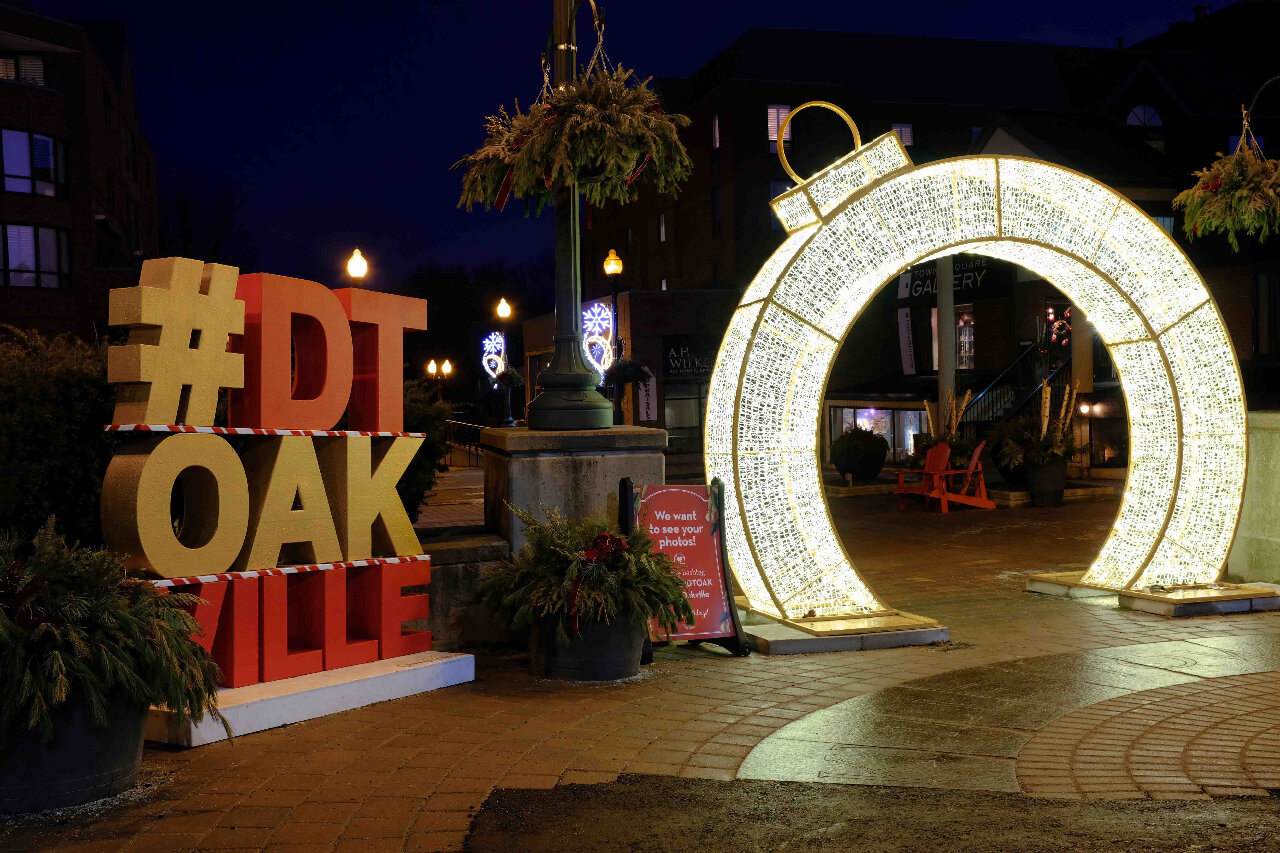
For those who might like a deeper and more pronounced frame, something that really pops, companion options such as the Standard Otaki Archway or the Loveland Heart Arch are great options. They can be used at secondary entrances or even mid-block pocket parks – especially if you want to assist in guiding market circulation.
Keep the following placement tips in mind for gateways:
One of the easiest and fastest ways to earn organic promotion is by creating photo opportunities that people won’t be able to resist. A clean backdrop and some obvious branding are must-haves. It should be easy to find on a map, centrally located, and accessible for all ages.
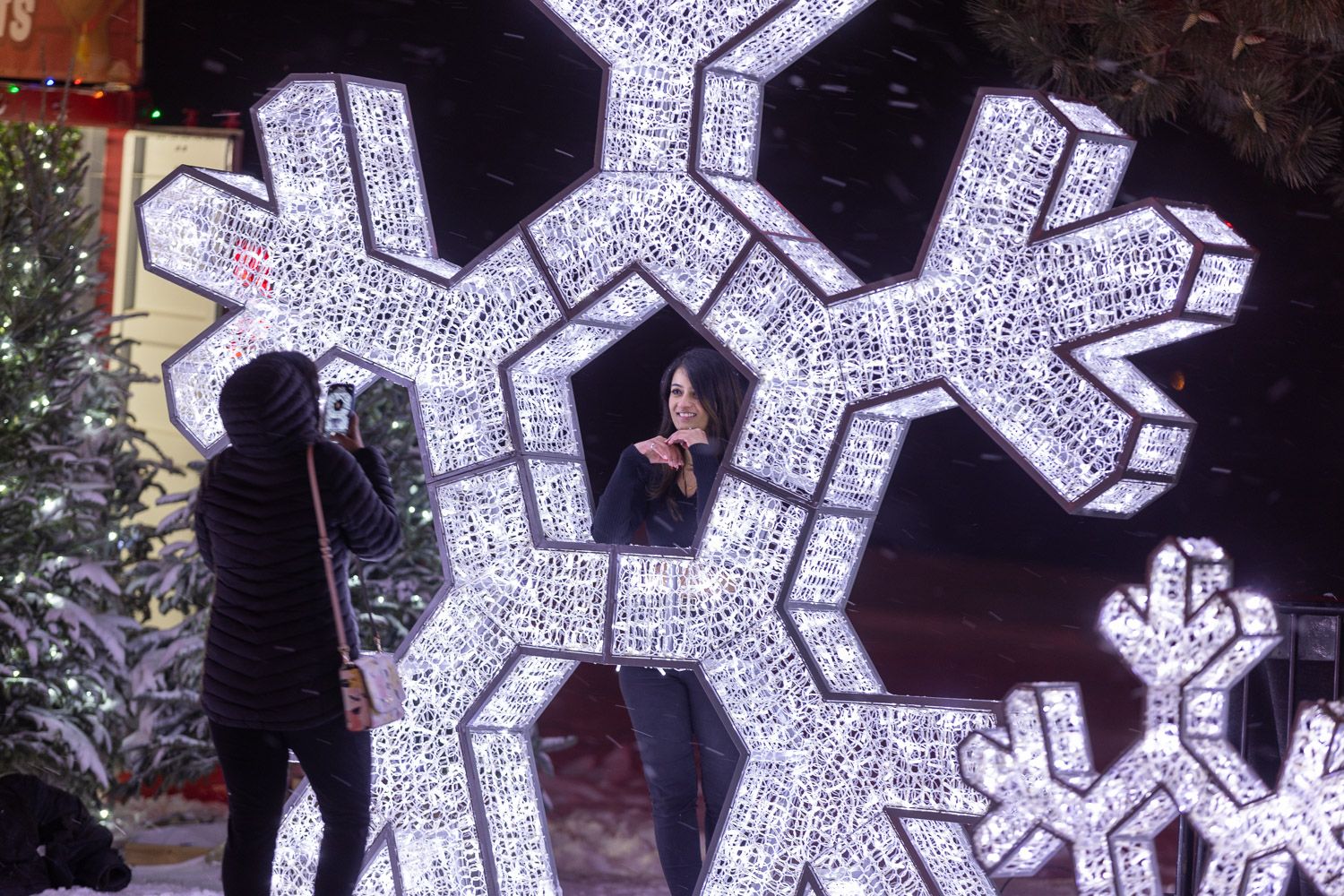
The way to do this is by creating a walk-through moment, especially by using displays such as the Tabora Walk-Through Present Box, with an interior that naturally frames faces.
Place it on a small riser for visibility, and use branded freestanding signs such as the HOPE 3D sign. It’s an easy way to create shareable photos. If you’re tight on space, consider using more compact photo-ops such as the Hanna Frame.
Attracting visitors to this photo opportunity should be one of your main goals. Here’s how to do just that.
One of the best tricks for creating a coherent holiday experience is to be consistent, and one way to do this is by using repeated wall and pole motifs. These help create repetition, rhythm, and they drive people forward.
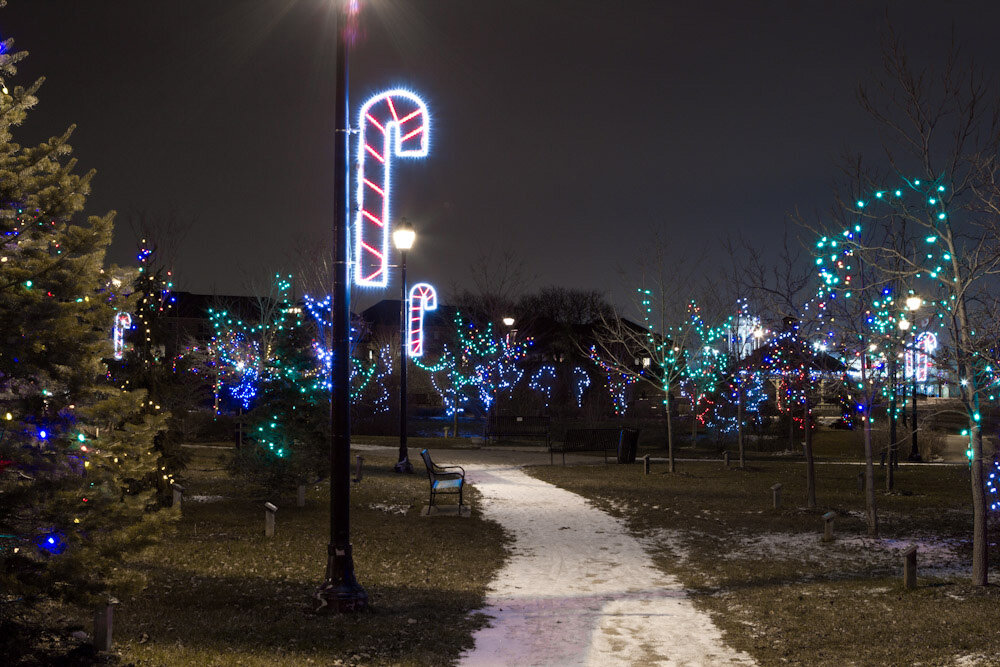
The choice of motif is yours, and of course, it should fit the rest of the streetscape. Classic Displays makes this easy thanks to the various pole and wall mount collections available, including the options such as the Snow Flurry, Snow Star, Poinsettia, Candy Cane, or Snow Spear.
To make the most out of your repeated pole motifs, follow the tips as outlined below.
One of the biggest difference-makers when it comes to keeping foot traffic within the corridor is to use good lighting. It’s about creating a rich and warm ambiance that makes people want to stick around.
You could do this using a three-tiered lighting plan:
Displays are what draws people in, but it’s the merchants that turn those visitors into buying customers. By using low-cost and easy touchpoints, you can ensure that every storefront gets a piece of the action.
This can be done in several ways. For instance, using window mini kits, such as a small wreath display combined with drape lighting and a clear acrylic sign holder with a seasonal hashtag. For merchants, you can offer guides on how to stage windows for nighttime viewing. Make sure they know to light from the front and keep focal points at eye level.
Another great way to bring merchants into the picture is by creating a hashtag and photo contest. You can encourage guests to stand under the gateways or in the walk-throughs, and tag participating businesses - the encouragement might come from something like a gift-card draw to the participating businesses.
Third, a good idea is to create a holiday map that displays the gateway, central photo-ops, and the blocks with the highest density of motifs. Also, include things that people always want to know, such as the location of washrooms, parking, transit, and indoor spaces. To tie in the merchants, feature their offers and late-night shopping dates on these maps.
This corridor, if nothing else, is a capital investment - one that keeps growing year after year. The holidays come back every year and that means you can slowly build up the area over time.
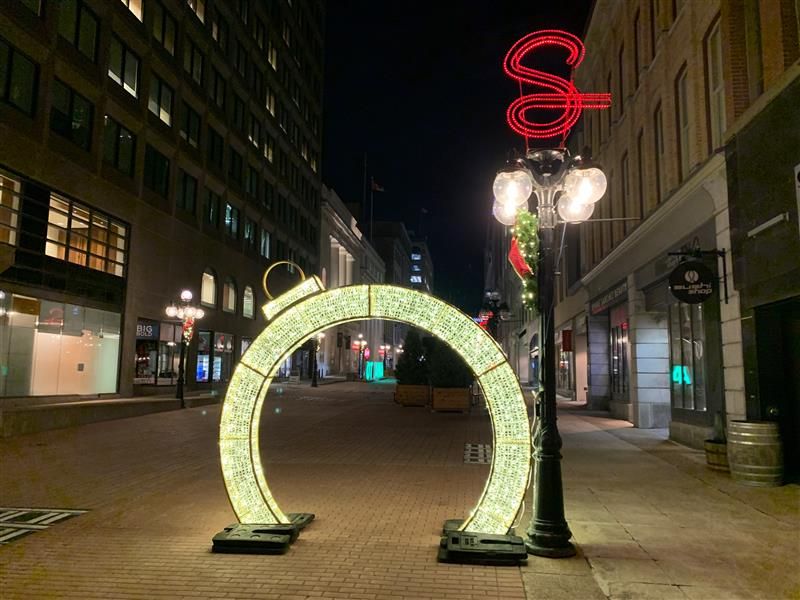
For example, year one could include investing in a gateway and photo-op, along with a starter set of pole motifs for the block with the highest traffic. Year two might include extending those motifs to adjacent blocks and adding overhead lights in alleys. Year three might include adding more photo-op graphics and sculptural accents.
Keep in mind that the displays provided by Classic Displays are durable and designed to withstand the harsh Canadian Winter. This means that a piece purchased in year one will remain in rotation for many years, especially with some basic care.
If funding is an issue, various partners can split the purchase, or you may even be able to secure sponsorship, such as by paying a bank to sponsor the photo-op (of course with their logo in plain sight). To stick within your budget, keep an eye out for our Clearance section for displays on discount!
If you’re ready to turn that basic streetscape into a showstopper this year and take your BIA to the next level using bright, warm, and eye-pleasing displays, contact us at [email protected], call 1-800-461-6635, or request a quote.